
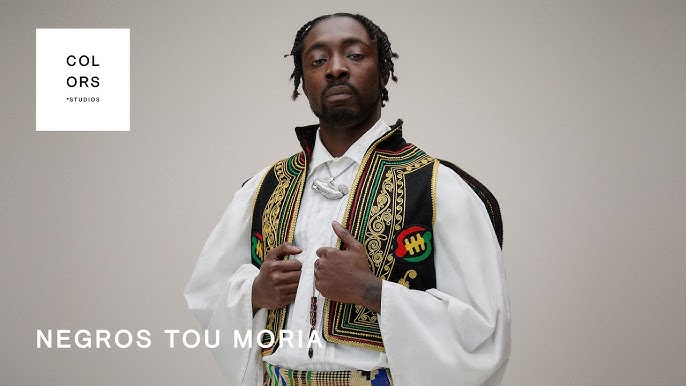
The Rise of Negros Tou Moria: How the Afrogreek Pioneer Reconfigured Greek Hip-Hop
In the global landscape of hip-hop, identity is both a shield and a canvas. Few artists embody this duality as strikingly as Negros Tou Moria (Black Morris), the trailblazing “Afrogreek” rapper who has radically redefined the boundaries of Greece’s urban music scene. Born Kevin Ansong (also known as Kofi Ansong) to Ghanaian immigrant parents in Athens, Negros Tou Moria has transcended the traditional boundaries of regional rap. By seamlessly fusing the raw grit of modern trap and boom-bap with the soulful, rebellious essence of Rembetika—the historical blues of the Greek underworld—he has crafted an entirely unique sub-genre often dubbed “Trabetiko.”
This biography explores his journey from the diverse neighborhoods of Athens to international art stages like documenta14 and top critical acclaim from global outlets like The Guardian, detailing how an independent artist managed to weave West African roots and Greek heritage into a cohesive, historically conscious cultural movement.
Quick Stats & Facts
-
Real Name: Kevin Ansong (also referred to as Kofi Ansong)
-
Stage Names: Negros Tou Moria, Black Morris, Kofi O Ataktos
-
Date of Birth: March 29, 1991
-
Birthplace: Athens, Greece
-
Nationality: Greek (of Ghanaian descent)
-
Identity Movement: Pioneer of the “Afrogreek” cultural identity
-
Signature Sound: Hip-Hop fused with Rembetika and traditional Greek folk music (Trabetiko)
-
Major Accolades: Best New Artist of the Year (Thessaloniki Hip Hop Festival, 2014); Starring role in the award-winning film Black Stone (2023); Ranked No. 2 on The Guardian’s Best Global Albums of 2025 for Mavri Ellada.
Early Life and the “Afrogreek” Identity
Kevin Ansong was raised in the multicultural, working-class neighborhoods of Athens, primarily navigating the vibrant but complex social fabric of areas like Ampelokipi and Kypseli. Growing up as a second-generation visible minority in Greece presented a distinct set of systemic and societal challenges. For many years, children of immigrants born on Greek soil faced severe bureaucratic hurdles regarding legal citizenship, existing in a liminal state where they felt entirely Greek yet lacked the official paperwork to prove it.
Rather than rejecting his complex reality, Ansong embraced a dual identity, coining and championing the term “Afrogreek”. This self-definition served a critical cultural purpose:
-
Honoring West African Roots: Staying deeply tied to his family’s Ghanaian heritage, rhythm, and oral traditions.
-
Claiming Greek Belonging: Asserting his absolute right to the language, history, and geography of the streets he grew up on.
Decoding the Moniker: The Black of Morias
His stage name, Negros Tou Moria, is a masterclass in cultural subversion and historical literacy. “Moria” is the Ottoman-era name for the Peloponnese peninsula in southern Greece. The most revered hero of the 1821 Greek War of Independence, Theodoros Kolokotronis, was famously nicknamed Geros tou Moria (The Old Man of Morias).
By substituting Geros (Old Man) with Negros, Ansong did something revolutionary. He injected his Black identity directly into the foundational mythology of modern Greece, positioning himself not as an outsider looking in, but as a modern-day revolutionary fighter navigating the contemporary struggles of the Athens concrete jungle.
The Musical Genesis: Blending Hip-Hop and Rembetika
Negros Tou Moria’s entry into music was shaped by the golden era of 1990s American hip-hop, local Greek rap pioneers (taking his first musical steps alongside the legendary MC Taki Tsan), and an unexpected love affair with vintage Greek folk music. While his peers were looking strictly to Atlanta or New York for inspiration, Ansong began digging into the crates of Greece’s musical past.
He found a kindred spirit in Rembetika (or Rebetiko). Originating in the early 20th century among marginalized refugees and urban outcasts in the ports of Piraeus and Thessaloniki, Rembetika was music born from poverty, drug counterculture, prison life, and displacement. To Ansong, the similarities between early 1920s Rembetika and late 20th-century American hip-hop were undeniable. Both genres were:
-
Created by marginalized communities stripped of societal power.
-
Formed as a direct response to systemic oppression and hardship.
-
Heavily criminalized and misunderstood by the mainstream elite upon inception.
By integrating the slang, rhythms, and thematic weariness of Rembetika into heavy urban beats, he created a soundscape that felt instantly nostalgic yet fiercely futuristic. He extended this vision into traditional folk musics from Epirus and Asia Minor, collaborating with Grammy-winning music producer Christopher King to further bridge his dual identities.
Key Career Milestones and Discography
Negros Tou Moria’s career is marked by a relentless drive for conceptual albums rather than fleeting, algorithm-friendly singles. His discography serves as an ongoing audio-biography of a changing Athens.
Global Recognition: documenta14 and The Guardian
In 2017, the contemporary art world took notice of Ansong’s cultural impact. The international art exhibition documenta14, which split its programming between Kassel, Germany, and Athens, featured Negros Tou Moria as a core performing artist. His performance piece, Black Odyssey, illustrated the migrant experience in the Mediterranean through the lens of hip-hop performance art.
His creative zenith hit global print media when his album Mavri Ellada (“Black Greece”) was ranked No. 2 on The Guardian’s prestigious list of the Best Global Albums. Pushing past regional folk boundaries into heavy G-funk and dancefloor synths, the record directly addresses the experience of second-generation Greeks navigating modern political shifts.
Artistry, Language, and Multi-Disciplinary Work
What sets Negros Tou Moria completely apart from his contemporaries is his masterful command of the Greek language. Rather than relying heavily on imported English rap slang, he utilizes an incredibly rich vocabulary that spans:
-
Archaic Greek Terms: Intentionally pulling older, formal words into urban contexts.
-
Rembetika Slang (Mangika): Utilizing the historical code words of the old Athenian underworld.
-
Modern Immigrant Patois: Integrating the linguistic shifts brought about by the African and South Asian diasporas in modern Athens.
His delivery is highly theatrical, often wearing a custom iced-out mala (prayer beads adopted from the aesthetic of old Rebetiko musicians) and mimicking the cadence of traditional Greek storytellers. Beyond music, his artistic reach expanded into theater, performing with the National Theater of Greece and at the Athens and Epidaurus Festival. In 2023, he also made a highly praised move into cinema, starring in the award-winning feature film Black Stone.
The Broader Impact: Paving the Way for the Afrogreek Movement
Negros Tou Moria’s success broke a massive cultural glass ceiling. For decades, the contributions of Black and immigrant creators to Greek pop culture were either exoticized or pushed entirely to the margins. Alongside figures like global basketball icon Giannis Antetokounmpo, Ansong has helped force a nationwide conversation regarding race, citizenship, and cultural ownership.
Through his independent label initiatives and community curation, he has created a blueprint for younger second-generation artists in Europe. He proved that you do not need to whitewash your art or mimic American archetypes to be successful; your localized, authentic truth is your greatest creative asset.
Frequently Asked Questions (FAQ)
How old is Negros Tou Moria?
Born on March 29, 1991, Negros Tou Moria is 35 years old.
What does the term “Afrogreek” mean?
“Afrogreek” is a term used to describe individuals of African descent who were born or raised in Greece, representing a synthesis of West African cultural roots and native Greek identity.
How does Negros Tou Moria incorporate traditional music into his rap?
He samples and draws thematic inspiration from Rembetika (traditional Greek urban blues) and regional folk music. He aligns the rebellious, anti-establishment themes of early 20th-century music with modern social commentary.
What is the significance of his album Mavri Ellada?
Released to massive acclaim, Mavri Ellada marked his rise to global prominence, achieving the No. 2 spot on The Guardian’s global album rankings for its bold production and fearless socio-political commentary.
To witness how his lyrics connect directly with the real-life landscapes of the Greek capital, watch this short documentary exploring how Afro-Greek rapper Negros Tou Moria uncovers hidden layers of Athens, showcasing the vibrant migrant communities that shape his music.