
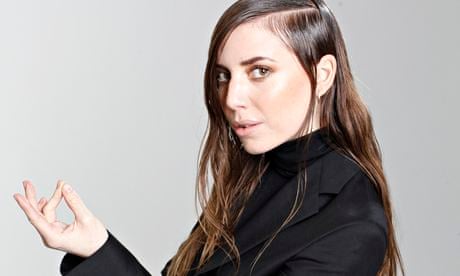
Lykke Li Biography: Age, Music Career, Albums, Songs, and Life of the Swedish Singer
Swedish singer-songwriter Lykke Li has built one of the most distinctive careers in modern alternative pop. Known for her haunting vocals, emotionally direct songwriting, and an ability to move between indie pop, dream pop, electronic music, and darker contemporary production, she has remained difficult to categorize throughout nearly two decades of recording.
Born Li Lykke Timotej Zachrisson on March 18, 1986, in Ystad, Sweden, Lykke Li first attracted international attention during the late 2000s. Her debut album, Youth Novels, introduced a sparse, rhythm-focused sound, while later records such as Wounded Rhymes and I Never Learn established her reputation for dramatic songs about desire, heartbreak, loneliness, and romantic obsession.
Her signature song, “I Follow Rivers,” became an international favorite and remains closely associated with her career. Rather than repeating that breakthrough formula, however, Li continued to reshape her music. Albums including so sad so sexy, EYEYE, and 2026’s The Afterparty demonstrate an artist willing to change production styles while preserving the emotional intensity at the center of her work.
Here is a closer look at Lykke Li’s biography, age, early life, career, albums, famous songs, musical style, and evolution as an artist.
Lykke Li Biography: Quick Facts
| Detail | Information |
|---|---|
| Full Name | Li Lykke Timotej Zachrisson |
| Professional Name | Lykke Li |
| Date of Birth | March 18, 1986 |
| Age | 40 years old as of 2026 |
| Birthplace | Ystad, Sweden |
| Nationality | Swedish |
| Profession | Singer, songwriter, musician, actress |
| Years Active | 2007–present |
| Primary Genres | Indie pop, alternative pop, dream pop, electronic pop |
| Debut Album | Youth Novels (2008) |
| Breakthrough Song | “I Follow Rivers” |
| Notable Albums | Youth Novels, Wounded Rhymes, I Never Learn, so sad so sexy, EYEYE, The Afterparty |
| Latest Studio Album | The Afterparty (2026) |
Who Is Lykke Li?
Lykke Li is a Swedish singer and songwriter recognized internationally for emotionally charged alternative pop. Her recordings frequently combine minimalist percussion, atmospheric keyboards, electronic textures, sweeping arrangements, and vulnerable vocals.
She emerged during a period when Scandinavian musicians were becoming increasingly influential in alternative and electronic pop, but Li quickly developed an identity separate from conventional Swedish pop.
Rather than relying primarily on polished, upbeat production, her songs often embrace melancholy. Love may be the recurring subject, but it is rarely presented simply. Desire, separation, regret, obsession, isolation, and emotional uncertainty repeatedly appear throughout her catalog.
That willingness to make vulnerability sound cinematic has become one of Lykke Li’s defining artistic qualities.
Early Life and Childhood
Li Lykke Timotej Zachrisson was born on March 18, 1986, in Ystad, Sweden.
Creativity was part of her environment from an early age. Her father, Johan Zachrisson, is a musician associated with the Swedish group Dag Vag. Growing up around artistic influences helped expose Li to music and creative expression long before she began releasing her own recordings.
Her childhood also involved considerable travel. Experiencing different places and cultures contributed to an upbringing that was less geographically fixed than that of many young artists.
Eventually, music became the central outlet through which she developed her own creative identity.
Her professional breakthrough would arrive in the second half of the 2000s, when she began collaborating with Swedish producer and musician Björn Yttling, known as a member of Peter Bjorn and John.
The Beginning of Lykke Li’s Music Career
Lykke Li’s early professional career took shape around the release of her 2007 EP Little Bit.
The title track became an important introduction to her sound. Its restrained production demonstrated several qualities that would become signatures of her early work: unusual percussion, space between instruments, intimate vocals, and melodies capable of sounding both playful and melancholy.
The attention surrounding Little Bit created momentum for her first full-length project.
In 2008, she released her debut studio album, Youth Novels.
Youth Novels and International Recognition
Youth Novels introduced Lykke Li to a substantially larger international audience.
The record contained songs including “Little Bit” and “I’m Good, I’m Gone,” pairing accessible melodies with production that was considerably less conventional than mainstream pop of the period.
Her voice was especially distinctive. Rather than relying on vocal power alone, Li often sang with restraint, using breathiness, repetition, and subtle changes in phrasing to intensify the emotional character of a song.
Youth Novels established her as an emerging Scandinavian artist with significant crossover potential.
Instead of immediately pursuing straightforward commercial pop, Li expanded the darker and more dramatic aspects of her songwriting on her next album.
Wounded Rhymes and “I Follow Rivers”
Lykke Li released Wounded Rhymes in 2011, marking a major step forward in her career.
The album was larger and more forceful than her debut while retaining the rhythmic foundation and emotional vulnerability that characterized her earlier recordings.
Its most famous song, “I Follow Rivers,” became Lykke Li’s defining international hit.
The track combines a memorable vocal refrain with insistent rhythm and lyrics centered on devotion and pursuit. Its combination of emotional immediacy and dance-friendly momentum helped the song reach listeners far beyond the alternative-pop audience that had initially embraced Li.
Over time, “I Follow Rivers” became one of the most recognizable European alternative-pop songs associated with the early 2010s.
Yet its success did not cause Li to spend the rest of her career recreating it.
I Never Learn and Lykke Li’s Heartbreak Era
Her third studio album, I Never Learn, arrived in 2014.
The record pushed further into cinematic melancholy. Where earlier songs sometimes balanced sadness with energetic percussion, I Never Learn often allowed heartbreak to dominate the atmosphere.
Songs such as “No Rest for the Wicked” demonstrated the scale of the album’s emotional approach. Expansive production, reverberant vocals, and dramatic melodies created a sound that could feel simultaneously intimate and enormous.
The album completed a highly regarded early run consisting of Youth Novels, Wounded Rhymes, and I Never Learn.
Together, those records established the central themes that would continue to follow Li: romantic longing, emotional contradiction, solitude, and the tension between vulnerability and independence.
Reinvention With so sad so sexy
After several years between studio albums, Lykke Li returned in 2018 with so sad so sexy.
The title accurately reflected the project’s contrasting qualities.
Instead of remaining exclusively within the cinematic indie-pop territory of I Never Learn, Li incorporated more contemporary R&B, hip-hop-influenced rhythms, electronic production, and streamlined pop structures.
Songs such as “sex money feelings die” showed how naturally her melancholic songwriting could function within a more modern, beat-oriented production style.
The transition demonstrated an important characteristic of Lykke Li’s career: she has rarely appeared interested in preserving a single sonic identity simply because it previously worked.
EYEYE and a More Intimate Direction
In 2022, Lykke Li released her fifth studio album, EYEYE.
The project represented another shift. Compared with the more contemporary production approach of so sad so sexy, EYEYE returned to a rawer and more intimate emotional atmosphere.
Songs including “No Hotel” and “Highway to Your Heart” reflected the record’s focus on relationships, memory, separation, and emotional repetition.
The album reinforced the idea that Lykke Li’s discography functions almost like a series of emotional environments. Production styles change from album to album, but love and its consequences remain persistent subjects.
The Afterparty: Lykke Li’s 2026 Album
Lykke Li entered another major chapter in 2026 with The Afterparty, released on May 8.
The album followed EYEYE and arrived nearly two decades after her earliest releases. It includes songs such as “Lucky Again,” “Knife In The Heart,” and “Sick Of Love.”
The Afterparty was presented as her sixth and potentially final studio album, giving the project unusual significance within her catalog.
Its musical approach combines Li’s established interest in dramatic emotional songwriting with orchestral and experimental textures. The project reflects an artist examining difficult emotions without attempting to turn every experience into a conventional story of personal triumph.
Whether it ultimately represents the conclusion of her album-making career or another transformation, The Afterparty stands as an important marker in the Lykke Li biography.
Lykke Li Albums in Order
Lykke Li’s principal studio albums are:
- Youth Novels — 2008
- Wounded Rhymes — 2011
- I Never Learn — 2014
- so sad so sexy — 2018
- EYEYE — 2022
- The Afterparty — 2026
Looking at the albums chronologically reveals substantial musical evolution. Youth Novels emphasized sparse indie-pop experimentation, Wounded Rhymes expanded her sound, and I Never Learn embraced sweeping heartbreak.
so sad so sexy incorporated modern R&B and electronic influences, while EYEYE moved toward intimate and atmospheric songwriting. The Afterparty continued the evolution with another emotionally intense and cinematic chapter.
Lykke Li’s Most Famous Songs
While “I Follow Rivers” remains her best-known recording, Lykke Li has developed a catalog extending far beyond one hit.
Among the songs most strongly associated with her career are:
- “I Follow Rivers”
- “Little Bit”
- “I’m Good, I’m Gone”
- “No Rest for the Wicked”
- “Gunshot”
- “Possibility”
- “sex money feelings die”
- “No Hotel”
- “Highway to Your Heart”
- “Lucky Again”
- “Knife In The Heart”
- “Sick Of Love”
“Possibility” also introduced Li’s music to an especially broad audience through its connection with The Twilight Saga: New Moon.
What Is Lykke Li’s Musical Style?
Lykke Li is frequently classified as indie pop or alternative pop, although neither term completely describes her catalog.
Her music has incorporated elements of dream pop, electronic music, R&B, dance music, art pop, and atmospheric singer-songwriter traditions.
More consistent than genre is her emotional approach.
A typical Lykke Li song often combines a strong melodic hook with lyrics that explore uncomfortable or contradictory feelings. Production may be minimalist or enormous, electronic or orchestral, but the vocal performance usually remains emotionally exposed.
That contrast between accessible melody and complicated emotion helps explain her longevity.
Acting and Other Creative Work
Although music remains central to her public identity, Lykke Li has also explored acting and other areas of visual creativity.
She appeared in films including Tommy and Terrence Malick’s Song to Song. Her interest in cinema also fits naturally with the visual dimension of her music career.
Music videos, photography, album artwork, fashion, and carefully developed visual concepts have regularly accompanied her releases.
Rather than treating an album as simply a collection of recordings, Li has often approached projects as broader artistic worlds.
Why Lykke Li Remains an Influential Alternative-Pop Artist
Lykke Li’s influence comes partly from her refusal to separate pop accessibility from emotional complexity.
She can write immediately memorable choruses without making the feelings behind them simple. Even her most danceable recordings frequently contain loneliness or unease beneath the rhythm.
Her career also demonstrates the value of artistic reinvention.
The young singer behind Little Bit developed into the artist responsible for the global appeal of “I Follow Rivers,” then moved into the expansive heartbreak of I Never Learn, contemporary textures of so sad so sexy, the intimacy of EYEYE, and eventually The Afterparty.
That progression has allowed her music to evolve without abandoning its emotional core.
Lykke Li Age in 2026
Lykke Li was born on March 18, 1986, making her 40 years old in 2026.
Her 40th year coincided with an especially significant period professionally, including the release of The Afterparty.
Rather than being defined solely by the indie-pop scene in which she initially emerged, Li has developed a career spanning multiple generations of alternative and mainstream pop.
Frequently Asked Questions About Lykke Li
What is Lykke Li’s real name?
Her full birth name is Li Lykke Timotej Zachrisson. She performs professionally under the name Lykke Li.
When was Lykke Li born?
Lykke Li was born on March 18, 1986.
Where is Lykke Li from?
She was born in Ystad, Sweden, and is Swedish.
How old is Lykke Li?
Lykke Li is 40 years old as of 2026.
What is Lykke Li famous for?
She is best known as a Swedish singer-songwriter and particularly for the international success of “I Follow Rivers.” She is also known for songs including “Little Bit,” “Possibility,” “No Rest for the Wicked,” and “sex money feelings die.”
What was Lykke Li’s first album?
Her debut studio album was Youth Novels, released in 2008.
How many studio albums has Lykke Li released?
As of 2026, Lykke Li has released six principal studio albums, from Youth Novels through The Afterparty.
What is Lykke Li’s latest album?
Her latest studio album is The Afterparty, released in May 2026.
What genre is Lykke Li?
Lykke Li is primarily associated with alternative pop and indie pop, although her music also draws from dream pop, electronic music, R&B, dance-pop, and art-pop influences.
Final Thoughts on Lykke Li’s Biography and Career
Lykke Li’s biography is ultimately the story of an artist who transformed melancholy into a remarkably flexible musical language.
From the understated rhythms of Youth Novels to the international breakthrough of “I Follow Rivers,” the devastating romantic atmosphere of I Never Learn, the modern production of so sad so sexy, and the introspection of EYEYE and The Afterparty, each phase has offered a different interpretation of the same fundamental artistic concerns.
Her strongest work thrives on contrasts: intimacy against enormous production, sadness against dance rhythms, vulnerability against confidence, and classic pop melodies against unconventional arrangements.
Nearly two decades after her debut, Lykke Li remains much more than the singer behind one internationally famous song. Her evolving catalog has made her a distinctive figure in Swedish music and modern alternative pop, with a body of work built around emotional honesty, experimentation, and an unmistakable sense of atmosphere.