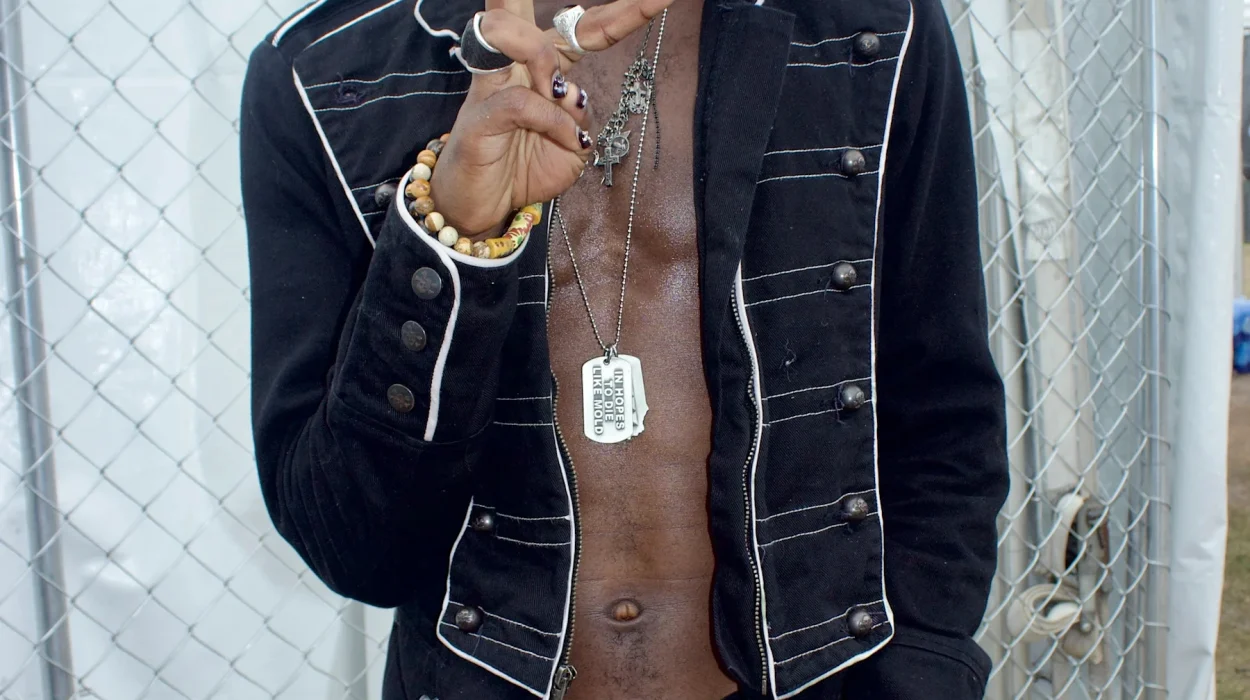
Lucy Bedroque Biography: Age, Real Name, Music Career, Albums and Rise in Underground Rap
Lucy Bedroque is an American rapper, singer, songwriter, and record producer whose experimental approach to hip-hop has made them an increasingly recognizable figure in the internet-driven underground music scene. Formerly known as Lostrushi, Bedroque has developed a distinctive musical identity built around distorted electronic production, unconventional melodies, dense textures, and influences that stretch beyond traditional rap.
Born Jeremiah Mark on May 7, 2006, Lucy Bedroque belongs to a generation of artists whose careers developed through SoundCloud, online communities, and independent creative networks rather than conventional music-industry pathways. Their work has been associated with digicore, experimental hip-hop, rage, electronic music, and related internet-born microgenres.
The release of projects such as SISTERHOOD, Fête de la Vanille, and especially the 2025 mixtape Unmusique expanded Bedroque’s profile beyond their early underground following. By 2026, collaborations, touring, festival appearances, and growing critical attention were establishing Lucy Bedroque as one of the notable young artists operating at the intersection of rap and electronic music.
Lucy Bedroque Biography at a Glance
Real name: Jeremiah Mark
Stage name: Lucy Bedroque
Former stage name: Lostrushi
Date of birth: May 7, 2006
Age: 20 years old as of August 2026
Birthplace: The Bronx, New York City, United States
Based in: Los Angeles, California
Profession: Rapper, singer, songwriter, record producer
Genres: Experimental hip-hop, rage, digicore, electronic rap
Years active: Early 2020s–present
Notable project: Unmusique
Record label: deadAir Records
Who Is Lucy Bedroque?
Lucy Bedroque is the professional name of Jeremiah Mark, a rapper and producer who initially gained attention online under the name Lostrushi.
Bedroque’s rise reflects a significant change in how young musicians can develop an audience. Rather than depending entirely on traditional record-label infrastructure, radio exposure, or local live performances, artists from Lucy’s generation can build creative communities online and release music directly to listeners.
That environment is particularly important to understanding Lucy Bedroque’s sound.
Their catalog is connected to the experimental side of internet rap, where the boundaries separating hip-hop, electronic music, pop, digicore, and rage are deliberately unstable. Production can move from delicate digital melodies to overwhelming bass and distorted percussion within the same musical world.
Lucy Bedroque has gradually turned those influences into an identifiable aesthetic rather than simply following one established genre.
Lucy Bedroque’s Age and Early Life
Jeremiah Mark was born on May 7, 2006, in The Bronx, New York City.
Bedroque moved from New York to the Los Angeles area while still a child, reportedly around the age of nine. The geographical shift placed them between two cities with major but very different musical cultures.
However, the internet would ultimately prove just as important to their artistic development as either physical location.
Bedroque became interested in music production at a young age. They have said they began experimenting with production around 2018, several years before reaching a wider audience.
By approximately 2020, they were also experimenting with vocals and uploading music online.
This early combination of producing and performing became an important part of Lucy Bedroque’s identity. Instead of approaching rap exclusively as a vocalist searching for outside beats, Bedroque developed an understanding of production that helped shape the unusual sonic environments surrounding their voice.
From Lostrushi to Lucy Bedroque
Before becoming widely known as Lucy Bedroque, Jeremiah Mark released music under several online identities, most notably Lostrushi.
The Lostrushi period is important because it documents the development of ideas that would eventually become central to the Lucy Bedroque sound.
Bedroque participated in online music communities and interacted with artists working around emerging styles such as digicore and sigilkore. These scenes frequently blurred the distinction between producer, vocalist, visual artist, and online personality.
Rather than working according to the rules of mainstream rap, musicians could trade files, collaborate remotely, experiment with extreme production choices, and release songs almost immediately.
Lucy Bedroque emerged from this environment with an increasingly recognizable creative identity.
The transition from Lostrushi to Lucy Bedroque represented more than a simple change of username. Lucy became a more complete artistic persona through which music, fashion, imagery, characters, and broader concepts could coexist.
Bedroque has explained that “Lucy” had already been used as part of their persona, while “Bedroque” developed separately before the two names were combined.
Lucy Bedroque’s Music Career
Lucy Bedroque’s earliest music circulated primarily within internet-based underground communities.
During this period, collaboration was fundamental.
Bedroque became connected with other emerging artists and producers, participating in a network where musicians regularly appeared on each other’s songs and influenced one another’s production techniques.
One particularly important collaborator was kaystrueno.
Their work became associated with the term “maplekore,” an informal name connected to music that combined whimsical digital textures with the abrasive production language of underground internet rap.
The name referenced the colorful digital atmosphere associated with the MMORPG MapleStory, providing an appropriate shorthand for music that could simultaneously feel nostalgic, fantastical, compressed, and chaotic.
This period helped distinguish Bedroque from artists making more conventional rage music.
SISTERHOOD and the Development of a Musical World
One of Lucy Bedroque’s important early projects was SISTERHOOD, released during the Lostrushi era.
The project demonstrated Bedroque’s growing interest in creating a complete artistic universe rather than simply assembling unrelated songs.
Characters and alternate identities became part of that universe, including Glutmother, a persona connected to themes of gluttony and different emotional aspects of the artist.
That conceptual approach became a recurring characteristic of Bedroque’s work.
Even when the music itself is aggressive, the surrounding aesthetic can draw from fantasy imagery, digital nostalgia, fashion, video games, anime, and other forms of internet culture.
The result is an artistic identity that is difficult to describe through a conventional rap category alone.
Fête de la Vanille and Continued Experimentation
Bedroque remained prolific throughout the following years.
Among their notable 2024 releases was Fête de la Vanille, a project that further developed the contrast between beautiful melodic textures and heavily processed underground rap production.
That contrast has become one of the most recognizable characteristics of Lucy Bedroque’s music.
A track might begin with delicate, almost dreamlike electronic sounds before expanding into distorted percussion, compressed vocals, and powerful low frequencies. Instead of treating sweetness and aggression as opposites, Bedroque frequently places them inside the same composition.
This approach helped build anticipation for the artist’s next major phase.
Unmusique and Lucy Bedroque’s Breakthrough
The release of Unmusique in 2025 became a significant milestone in Lucy Bedroque’s career.
The mixtape arrived through deadAir Records, placing Bedroque within a label ecosystem already associated with forward-thinking internet and alternative music.
Compared with some earlier material, Unmusique pushed toward a larger and more immediate sound.
The production is frequently maximalist. Synthesizers compete for space with enormous bass, electronic effects, compressed percussion, and vocals that move between melodic phrasing and rhythmic rap delivery.
Yet traces of Bedroque’s earlier musical identity remain underneath the intensity.
Songs including “2010 Justin Bieber” helped introduce the artist to a broader audience, while the complete project demonstrated how Bedroque could translate an experimental underground aesthetic into something more accessible without completely abandoning its eccentricity.
Unmusique also attracted substantial music-media attention, helping move the Lucy Bedroque name beyond the relatively insular communities where the artist had first developed.
What Genre Is Lucy Bedroque?
Lucy Bedroque is generally categorized as a hip-hop and rap artist, but that description alone does not fully represent the music.
Several overlapping genres can be heard throughout the catalog, including:
- Experimental hip-hop
- Rage
- Digicore
- Electronic music
- Cloud rap
- Hyperpop-adjacent production
- Sigilkore-associated sounds
The terminology surrounding internet music changes rapidly, and Bedroque’s work demonstrates why strict genre classifications can become limiting.
At its core, Lucy Bedroque’s music combines rap performance with highly manipulated digital production.
Synthesizers may be intentionally overwhelming. Bass can distort heavily. Melodies sometimes resemble video-game music or early internet audio, while vocals may be processed until they function almost like another electronic instrument.
The tension between beautiful melodies and abrasive sound design is a defining part of the appeal.
Lucy Bedroque’s Musical Influences and Style
Bedroque’s creative world draws inspiration from sources well beyond contemporary American hip-hop.
Japanese popular culture, anime, video games, electronic music, alternative fashion, and internet aesthetics have all appeared around their work.
The visual component is particularly important.
Lucy Bedroque’s presentation often complements the music’s mixture of futuristic technology and nostalgic digital culture. Instead of maintaining a straightforward rapper image, the artist treats clothing, graphics, fictional personas, and musical production as interconnected elements.
This multidisciplinary approach reflects a broader trend among younger independent artists, but Bedroque’s particular combination of references gives the work its own personality.
Lucy Bedroque’s Notable Songs
Listeners discovering Lucy Bedroque for the first time may encounter songs from several different periods of the artist’s development.
Notable and widely recognized tracks include “2010 Justin Bieber,” “How to Pretend,” “Fenty Face,” “Knot Me,” “Ultraviolet,” “Cara Mia,” and “Mimosa.”
Earlier material and releases under the Lostrushi identity also remain important for understanding how the current style developed.
Because Bedroque’s music has changed considerably over time, listening chronologically can reveal the transition from experimental SoundCloud production toward the cleaner but still highly maximalist approach heard on Unmusique.
Collaborations and the Underground Music Community
Collaboration has remained central to Lucy Bedroque’s career.
The artist has worked within a network of rappers and producers connected to contemporary internet music, including figures such as kaystrueno, egobreak, prettifun, ivvys, slayr, kuru, and others.
These relationships matter because underground digital music scenes often develop collectively.
A producer can introduce a new sound that spreads through several artists. A vocalist may appear on another musician’s track and introduce both performers to different audiences. Ideas develop rapidly as musicians exchange techniques and reinterpret each other’s styles.
Lucy Bedroque’s career illustrates this collaborative model particularly well.
Lucy Bedroque and deadAir Records
Signing with deadAir Records marked another important stage in Bedroque’s professional development.
The partnership accompanied the release of Unmusique and placed the artist alongside musicians associated with similarly adventurous approaches to internet-era music.
Rather than transforming Bedroque into a conventional mainstream rapper, the relationship appears to have allowed the artist’s experimental qualities to remain central.
That balance is significant.
Many underground musicians face the challenge of reaching larger audiences without losing the characteristics that initially made their work distinctive. Bedroque’s development suggests that increased visibility does not necessarily require abandoning unconventional production.
Touring and Growing Recognition
Following Unmusique, Lucy Bedroque’s presence in live music expanded.
The artist performed and toured across the United States and appeared at increasingly visible events. By 2026, Bedroque was also appearing on touring bills alongside artists including kuru and 9lives.
Lucy Bedroque’s appearance at Rolling Loud in 2026 represented another indication of their growing profile.
Moving from SoundCloud-centered communities to established festival stages within only a few years illustrates how rapidly the modern underground-to-mainstream pipeline can operate.
It also reflects the increasingly significant influence of online rap scenes on the wider hip-hop landscape.
Why Lucy Bedroque Stands Out
Lucy Bedroque’s significance comes from more than age or internet popularity.
Their strongest distinguishing characteristic is an apparent willingness to treat rap as an open-ended format.
Hip-hop remains the foundation, but electronic production, digital nostalgia, fashion, fictional characters, visual culture, and online community all contribute to the final artistic identity.
Bedroque’s evolution from a young producer experimenting online to an artist releasing critically discussed projects demonstrates how contemporary music careers can develop outside traditional structures.
There is also a clear progression in the catalog.
Early recordings document experimentation and community building. Projects such as SISTERHOOD expanded the conceptual world surrounding the music. Fête de la Vanille refined its unusual melodic qualities, while Unmusique translated many of those ideas into a bigger and more explosive form.
Lucy Bedroque’s Future
At only 20 years old in 2026, Lucy Bedroque remains at an early stage of a potentially much longer career.
The artist has already moved through multiple names, production styles, communities, and creative identities in a relatively short period. That history makes continued evolution more likely than strict adherence to a single formula.
Their expanding touring presence and collaborations also suggest that Bedroque’s influence is moving beyond the internet communities that initially supported the music.
Whether future releases become more accessible, more electronic, or return to the delicate experimental qualities of earlier projects, reinvention has already become an important part of the Lucy Bedroque story.
Frequently Asked Questions About Lucy Bedroque
What is Lucy Bedroque’s real name?
Lucy Bedroque’s real name is Jeremiah Mark.
How old is Lucy Bedroque?
Lucy Bedroque was born on May 7, 2006, making the rapper 20 years old as of August 2026.
Where was Lucy Bedroque born?
Lucy Bedroque was born in The Bronx, New York City, and later moved to the Los Angeles area while growing up.
What was Lucy Bedroque’s old name?
Before adopting the Lucy Bedroque name, the artist was best known as Lostrushi. Other names were also used during earlier stages of their online music career.
What genre is Lucy Bedroque?
Lucy Bedroque primarily makes experimental hip-hop combining elements of rage, digicore, electronic music, cloud rap, and internet-based underground rap styles.
What is Lucy Bedroque’s most notable project?
The 2025 mixtape Unmusique is one of Lucy Bedroque’s most prominent releases and helped significantly increase the artist’s recognition outside the underground scene.
Is Lucy Bedroque a producer?
Yes. Lucy Bedroque is both a vocalist and record producer. Production has been an important part of their musical development since before their wider recognition as a rapper.
Final Thoughts
Lucy Bedroque represents a generation of musicians for whom the internet is not simply a promotional tool but an essential part of artistic development.
Beginning as a young producer experimenting with music online, Jeremiah Mark progressed through different aliases and underground communities before establishing the Lucy Bedroque identity. Along the way, the artist developed a sound that combines explosive rap production with melodic electronic textures, digital nostalgia, conceptual characters, and an unconventional visual aesthetic.
Projects such as SISTERHOOD and Fête de la Vanille established the foundations of that world, while Unmusique brought Lucy Bedroque to considerably wider attention.
With increased touring, collaborations, festival appearances, and recognition surrounding the music, Lucy Bedroque’s career has expanded substantially from its SoundCloud beginnings. Yet experimentation remains at the center of the artist’s appeal.
For listeners following the changing landscape of experimental hip-hop, digicore, and internet-born rap, Lucy Bedroque is an artist whose continuing evolution will be worth watching.