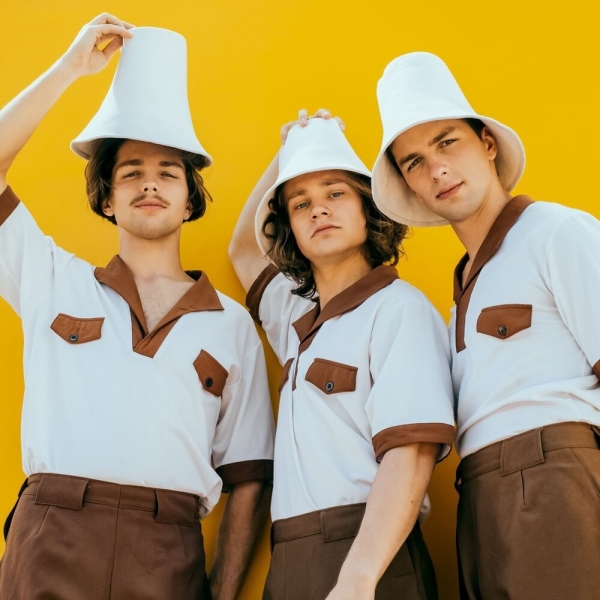
The Inspiring Journey of Carnival Youth: Latvia’s Premier Indie Rock Sensation
The European indie rock scene is a vast, shimmering landscape of diverse sounds, but few bands have captured the hearts of international audiences quite like Carnival Youth. Hailing from Riga, Latvia, this dynamic multi-instrumental quartet has spent over a decade redefining Baltic alternative music. Blending lush, cinematic melodies with energetic guitar riffs, intricate rhythms, and profound, melancholic lyrical themes, Carnival Youth has established themselves as one of the most successful Latvian musical exports of the 21st century.
For music enthusiasts exploring global indie scenes and editors tracking Google Discover music trends, Carnival Youth represents a fascinating case study in artistic evolution. From their early days as teenage sensation winners of the European Border Breakers Award (EBBA) to their ambitious, multi-volume cinematic soundscapes, their journey is a testament to the power of sonic experimentation.
This comprehensive biography explores the origins, major breakthroughs, definitive discography, and the unique artistic vision that continues to drive Carnival Youth forward.
The Origins: A Musical Brotherhood in Riga
The story of Carnival Youth began in 2011 in Riga, Latvia, born out of a shared passion for classic rock, British indie pop, and contemporary alternative music. The foundational core of the band rests on a unique familial bond: twin brothers Edgars Kaupers (drums, vocals) and Emīls Kaupers (guitar, vocals). Growing up in a deeply musical household—their father, Renārs Kaupers, is the frontman of Brainstorm (Prāta Vētra), Latvia’s most legendary rock band—the twins were exposed to the realities and joys of the music industry from an early age.
Seeking to forge their own distinct identity, the brothers teamed up with childhood friends and exceptionally talented multi-instrumentalists Roberts Vanags (keyboards, vocals) and Aleksis Luriņš (bass, guitar, synths).
What set the band apart right from their inception was their democratic approach to instrumentation and songwriting. Rather than relying on a singular frontman, Carnival Youth developed a signature sound characterized by:
-
Interlocking, multi-part vocal harmonies.
-
Fluctuating roles where members frequently swap instruments during live performances.
-
A blend of bright, rhythmic indie-pop hooks with deep, atmospheric Nordic melancholy.
Spending their formative years rehearsing in local garages and small Riga underground venues, they meticulously crafted an English-language repertoire aimed squarely at crossing geographical borders.
Breakthrough and International Acclaim (2014–2016)
Carnival Youth did not have to wait long for their hard work to yield results. In the spring of 2014, the band released their debut EP, Never Have Enough. The five-track extended play was an instant critical success in the Baltics, showcasing a mature, polished sound that belied their young age. The standout single, “Never Have Enough,” caught the attention of international radio programmers and festival bookers, setting the stage for their debut full-length album.
No Clouds Allowed (2014)
In October 2014, Carnival Youth released their groundbreaking debut LP, No Clouds Allowed. Produced alongside acclaimed Latvian producer Gatis Zaķis, the album was a masterclass in indie-pop craftsmanship. Tracks like “Octopus” and “Akmentiņi” demonstrated their ability to transition seamlessly between intricate, math-rock-tinted guitar work and sweeping, radio-friendly choruses.
The impact of No Clouds Allowed reverberated across Europe:
-
The Latvian Music Recording Awards: The album won the prestigious title of “Best Debut.”
-
European Festivals: The band secured coveted slots at major European showcase festivals, including Eurosonic Noorderslag (The Netherlands), The Great Escape (UK), and Reeperbahn Festival (Germany).
The EBBA Milestone and Propeller (2016)
The year 2016 marked Carnival Youth’s official coronation on the continental stage. At the Eurosonic festival in Groningen, they were awarded the European Border Breakers Award (EBBA), a prize recognizing emerging artists who successfully connect with audiences outside their home countries (joining the ranks of previous winners like Adele, Mumford & Sons, and Phoenix). Crucially, they also won the EBBA Public Choice Award, voted on by fans across Europe.
Riding this wave of international momentum, they released their second studio album, Propeller, in April 2016. Recorded partly in the UK, Propeller was grittier, faster, and more rhythmically complex than its predecessor. Songs like “Surf” and “Connection Lost” highlighted a sharper, alternative rock edge, earning praise from influential tastemakers like Clash Magazine and BBC Radio 6 Music.
Sonic Evolution: Vienā Vilcienā and Goodetic (2017–2019)
As the band toured relentlessly across the UK, Germany, Poland, and the Baltic states, their musical ambitions began to broaden. Having proven their prowess in the English-language indie market, they turned their attention inward to explore the poetic nuances of their native tongue.
Vienā Vilcienā (2017)
In 2017, Carnival Youth released Vienā Vilcienā (Translated: In One Train), their first studio album written entirely in Latvian. The record was an intimate, highly creative project that accompanied a self-directed concert film. Freed from the constraints of translating their thoughts into a second language, the band’s lyricism became more abstract, poetic, and emotionally resonant. The album solidified their status as cultural icons at home, proving that their appeal wasn’t merely novelty international success, but deeply rooted artistic talent.
Goodetic (2019)
Returning to English lyrics, the band dropped Goodetic in 2019. This album represented a distinct shift toward electronic experimentation. While guitars and acoustic drums remained vital, Goodetic leaned heavily into analog synthesizers, drum machines, and darker soundscapes.
Tracks like “Boys Do Cry” and “Only the Moon Can See the Sun” addressed modern anxieties, the digital age, and the psychological weight of constant touring. The album was supported by an extensive European tour, re-establishing their presence in Western European indie clubs.
The Naivais Ku-Kū Era: Celebrating Latvian Cinema Heritage
When the global pandemic disrupted the live music industry in 2020, Carnival Youth pivoted toward a massive cultural preservation project that would become one of the most successful chapters in their career: Naivais Ku-Kū.
The band embarked on a journey to re-arrange, record, and revitalize classic songs from iconic Latvian movies spanning the 1960s to the 1990s. These pieces, originally composed by legendary Baltic figures like Imants Kalniņš and Raimonds Pauls, are deeply embedded in the cultural DNA of the region.
| Album Title | Release Year | Primary Language / Focus | Key Tracks |
| No Clouds Allowed | 2014 | English / Indietronica & Indie Pop | “Octopus”, “Never Have Enough” |
| Propeller | 2016 | English / Alternative & Post-Punk Revival | “Surf”, “Hunting For The Sun” |
| Vienā Vilcienā | 2017 | Latvian / Acoustic & Conceptual Indie | “Kilometriem Tālu”, “Pavasaris” |
| Goodetic | 2019 | English / Synth-Pop & Experimental Rock | “Boys Do Cry”, “Desktop” |
| Naivais Ku-Kū | 2020 | Latvian / Classic Cinema Re-imaginings | “Dzeguzes Balss”, “Viņi Dejoja Vienu Vasaru” |
The Naivais Ku-Kū project was a phenomenal success. Carnival Youth stripped away the traditional, orchestral arrangements of the original tracks, replacing them with their signature indie-rock energy, vintage synths, and driving rhythms.
They performed over 100 open-air concerts across regional Latvia, playing in historic castle ruins, local parks, and coastal towns. The project bridged a massive generational gap, introducing timeless mid-century compositions to Gen-Z listeners while satisfying older generations with nostalgic yet fresh interpretations.
Continuous Impact on the Alternative Music Scene
Today, Carnival Youth stands as a beacon of independence and consistency in the European music circuit. Their ability to balance international indie-pop sensibilities with a profound respect for their Baltic heritage has allowed them to maintain a highly dedicated, global fanbase.
Beyond their studio albums, the band members are active contributors to the wider arts community. They frequently collaborate with contemporary visual artists, compose scores for theatrical productions, and mentor emerging Baltic musicians navigating the complex world of international touring.
Expert Insights: Why Carnival Youth Fulfills the Modern Indie Palette
For music critics and playlist curators, Carnival Youth’s enduring appeal lies in their meticulous balance of opposing forces. Their music perfectly demonstrates how a band can evolve without losing its core identity.
1. The Art of Multi-Instrumentalism
Unlike traditional rock setups where roles are rigid, watching Carnival Youth live is a lesson in fluid musicality. A single concert might see Roberts Vanags move from keys to lead vocals, while Aleksis Luriņš shifts from a driving bassline to intricate synth pads. This versatility keeps their studio arrangements dense, unpredictable, and highly rewarding for audiophiles.
2. Cross-Cultural Lyricism
Writing music in both English and Latvian allows the band to tap into different emotional reservoirs. Their English tracks lean into universal themes of youth, existential wandering, and modern disconnect, while their Latvian material captures a distinct, poetic folklore-infused worldview that provides an exotic, enchanting allure to international listeners.
Frequently Asked Questions (FAQ)
Who are the members of Carnival Youth?
The band consists of four members: Edgars Kaupers (drums, vocals), Emīls Kaupers (guitar, vocals), Roberts Vanags (keyboards, vocals), and Aleksis Luriņš (bass, synths, guitar).
Where is Carnival Youth from?
Carnival Youth was formed in Riga, the capital city of Latvia, in 2011.
What was the breakthrough moment for the band?
Their major breakthrough occurred between 2014 and 2016, following the release of their debut album No Clouds Allowed and winning both the European Border Breakers Award (EBBA) and the EBBA Public Choice Award in 2016.
Are the members of Carnival Youth related to the band Brainstorm?
Yes, twin brothers Edgars and Emīls Kaupers are the sons of Renārs Kaupers, the lead singer of the legendary Latvian rock band Brainstorm (Prāta Vētra).
What is the “Naivais Ku-Kū” project?
Naivais Ku-Kū is a highly acclaimed conceptual project by Carnival Youth where they re-imagined and modernized classic songs from historic Latvian cinema, turning them into indie-rock tracks